Login

Sign Up

After creating an account, you'll be able to track your payment status, track the confirmation and you can also rate the tour after you finished the tour.
Username*
Password*
Confirm Password*
First Name*
Last Name*
Birth Date*
Email*
Phone*
Country*
* Creating an account means you're okay with our Terms of Service and Privacy Statement.
Please agree to all the terms and conditions before proceeding to the next step

Already a member?

Login

Indian Ocean Diving

The Indian Ocean along Mozambique’s coastline is among the least disturbed stretches of marine environment in the world. Reef systems that have been spared the pressure of mass tourism, water temperatures that support an exceptional diversity of marine life, and dive sites ranging from shallow coral gardens to deep walls and historic wrecks. For divers who know what to look for, this part of the Indian Ocean is genuinely world-class.

We have been diving these waters for fifteen years. Our team knows which sites produce reliable encounters with whale sharks and manta rays and when, which operators run the tightest dive boats, and which lodges are worth the journey for the diving alone.

What to Expect Underwater

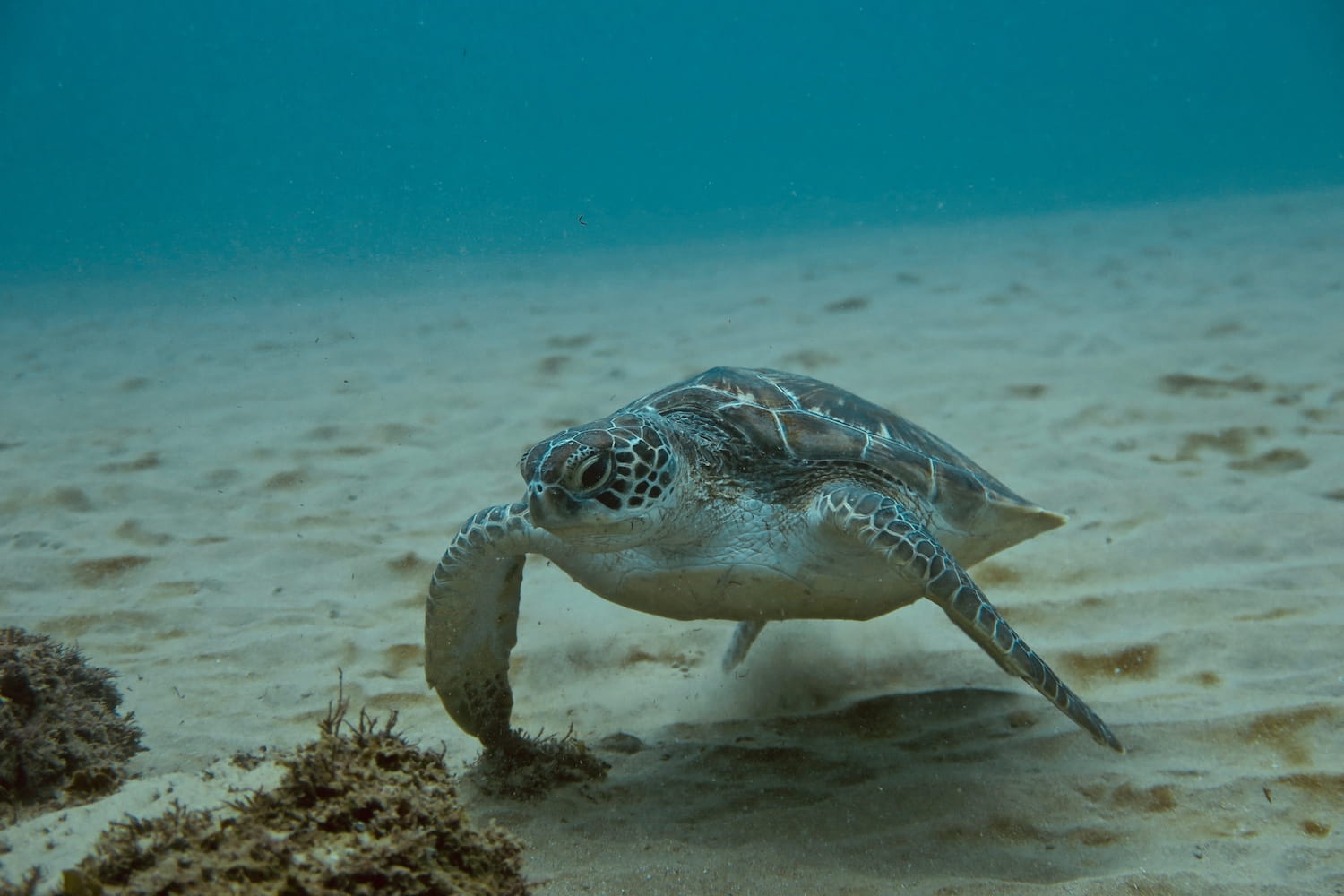
Mozambique’s reefs support a marine ecosystem of genuine breadth. Coral gardens in exceptional condition provide habitat for hundreds of reef fish species: angelfish, butterflyfish, parrotfish, groupers, snappers and barracuda in numbers that reflect how little fishing pressure these sites receive. Hawksbill and green turtles are encountered regularly at most sites.

Larger marine life draws serious divers. Whale sharks are present along the Mozambique coast year-round, with the highest concentrations around Tofo and the Bazaruto Archipelago between October and March. Manta rays are among the most reliably encountered in the world at Tofo, where aggregations during the right season are extraordinary. Humpback whales pass through the channel between July and November.

Beyond the headline species, Mozambique rewards patient divers. Nudibranchs, seahorses, frogfish and other macro life populate the reef systems alongside the large schools and pelagic encounters. Night diving opens up an entirely different cast of species. The variety across a single week of diving here is difficult to match anywhere else on the Indian Ocean coast.

sea turtle mozambique

Mozambique Dive Destinations

Tofo Beach

Tofo is the go-to spot for large pelagic encounters on Mozambique’s coast. Whale sharks and manta rays aggregate here with a reliability found in very few places in the world, and the dive operators based here have decades of experience reading the conditions and finding the animals. Reef dives at Tofo also produce consistently strong results: the coral systems are healthy, and the fish life is prolific.

The best manta encounters at Tofo occur when the nutrient-rich currents bring in plankton blooms. Your operator will know the conditions before you enter the water. Between October and March, the encounters are most frequent, but manta rays are present year-round.

Bazaruto Archipelago

The Bazaruto Archipelago is a national marine park, and the protection shows in the condition of its reefs. Coral coverage is exceptional by any standard, and the diversity of marine life reflects years of managed conservation. The archipelago is also one of the last places in the Indian Ocean where dugongs are reliably encountered: small populations survive in the seagrass beds between the islands.

Diving in the archipelago ranges from shallow coral gardens suitable for less experienced divers to deeper wall dives and channel crossings with stronger currents. The topography varies considerably among sites, making the archipelago rewarding over multiple days of diving.

Vilanculos

Vilanculos is the mainland gateway to the Bazaruto Archipelago and a dive destination in its own right. The reefs accessible from Vilanculos are less visited than those further into the archipelago, which suits divers who prefer quieter sites. The town also has a relaxed, genuinely Mozambican character that feels distinct from that of the more exclusive island lodges.

Lake Malawi: Freshwater Diving

Lake Malawi offers something found nowhere else on earth. The lake is home to more than 700 species of cichlid fish, the vast majority of them endemic to its waters and found nowhere else in the world. Diving or snorkelling here is not the same experience as the ocean, but it is genuinely extraordinary in its own right: visibility in the southern lake can reach fifteen metres or more, and the concentration and colour of the cichlid species is unlike anything in freshwater diving.

The best freshwater diving is in the rocky sections of the southern lake, where cichlid populations are most dense. Different rock formations shelter different species, and divers who take the time to move slowly and look carefully are rewarded with encounters that are, in their own way, as memorable as anything in the ocean.

scuba diving, Mozambique

How We Plan Your Diving Trip

Diving itineraries in Mozambique work best when built around the specific species and experiences you want. Whale shark encounters peak at different times than manta aggregations. Currents and tides shape the best reef diving in the Bazaruto Archipelago throughout the season. We match your travel dates, experience level and wish list to the right destination and operator.

Most diving trips combine time in the water with time on the beach or a broader safari itinerary. We handle all the logistics: flights, transfers, lodge bookings, dive operator introductions and any equipment guidance you need before you travel.

Speak to a Specialist
Call: +265 997 725 777 | Email: sales@craftedafrica.com
Tapiwa
Tapiwa Mayuni - Director of Sales & Reservations

At Crafted Africa, we are passionate about what we offer our clients:

  • A travel experience that is unique, far above anything you’ll get through any other tour operator and packed with value.
  • A certified itinerary that complies with international travel standards and sustainability and which feeds back into our local communities.
  • Travel with a soul: We love our Team and our Suppliers and aim to uplift wherever possible.

Indian Ocean Diving FAQs

When is the best time to dive in Mozambique?

October to March is the peak season for whale shark and manta ray encounters, particularly around Tofo. Water temperatures are warmest between November and April. The Bazaruto Archipelago offers good diving year-round, with visibility and conditions varying by season. Between July and November, humpback whales are present in the channel. Talk to our team about the right timing for the specific encounters you are looking for.

Can non-divers participate?

Yes. Snorkelling in Mozambique is exceptional and puts you in the water alongside much of the same marine life as divers. Whale shark encounters are conducted as snorkel experiences at most operators, meaning non-divers have equal access to the headline encounters. For guests who want to learn to dive, several operators offer PADI courses at their bases. Talk to our team about the right option for your group.

Can diving be combined with a safari?

Yes, and it is one of the most popular combinations we build. A safari in Malawi or Zambia, followed by five to seven nights diving on the Mozambique coast, gives you two completely different but equally extraordinary experiences in a single trip. The charter flight between the bush and the coast takes less than two hours. We design these itineraries regularly and know exactly how to pace them.

Proceed Booking