There is a version of Africa you cannot see from a vehicle. It is the version your guide finds in a track pressed into the dust, in the alarm call of a francolin fifty metres ahead, in the direction the wind is moving through the grass. Walking through the bush changes what you notice, what you hear, and what you understand about the landscape around you. It is the oldest way of travelling in Africa and, in many ways, still the best.
We work with some of the finest walking safari operators on the continent, in parks that have pioneered the discipline and in landscapes that reward the pace. In Malawi, Zambia, and Zimbabwe, walking is not an alternative to the safari experience. It is the safari experience.
Angie Holt, our Head of Brand and Marketing, describes the walk that stays with her most – South Luangwa, October 2025:
I went on a walking safari in the birthplace of walking safaris, South Luangwa National Park in Zambia, with some of the best guides in the business. I was staying at Chichele Presidential, and in mid-October in Zambia, it was incredibly hot. We had been out exploring for days, and everyone was feeling the heat.
One morning, the group I was travelling with decided to start slower. We were exhausted, and honestly, the thought of a little extra rest was tempting. But I decided to go on the walk anyway. I’ve always believed you should never skip a game drive or a walk because you never know what might happen.
At the time, we had been hoping to see wild dogs for days. Every game drive seemed to end with us saying, “Maybe tomorrow.” As we headed out on foot that morning, I wasn’t really thinking about wild dogs. I was completely immersed in the walk. It feels so different to being in a vehicle. You’re focused on the ground beneath your feet, the tracks, the sounds, the smells, and everything around you. Your senses seem to come alive.
Then I heard a strange noise. It wasn’t a sound I recognised, and I remember looking around, wondering what it could be. Our guide explained that it was a wild dog calling to its pack.
Not long after, a lone wild dog came running straight past us.
I can still remember the feeling. My heart was racing. There we were, standing in the middle of South Luangwa, watching one of Africa’s most elusive predators move through the bush. It all happened so quickly, but it is a moment I will never forget.
What made it so special wasn’t just seeing the wild dog. It was the way I experienced it. Being on foot made me feel part of the landscape, not just an observer passing through it. We often talk about enjoying the smaller things on safari, and walking teaches you to do exactly that. But every now and then, those smaller moments lead to something extraordinary.
To this day, it remains one of the most memorable wildlife encounters I’ve ever had.
Angie Holt, Head of Brand and Marketing, Crafted Africa


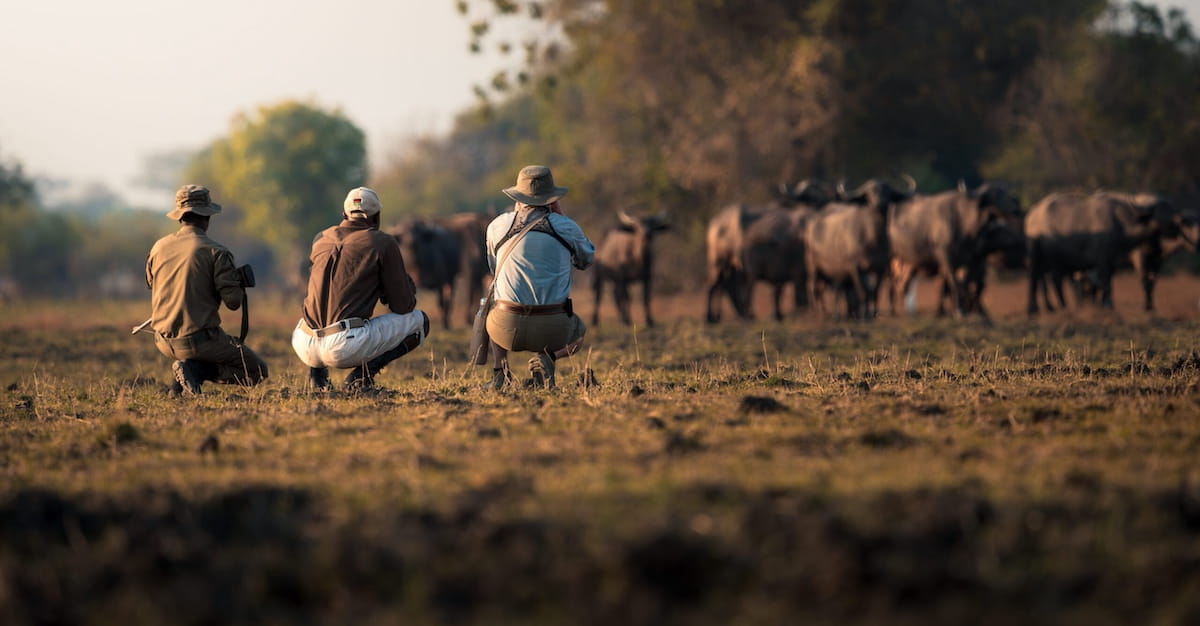
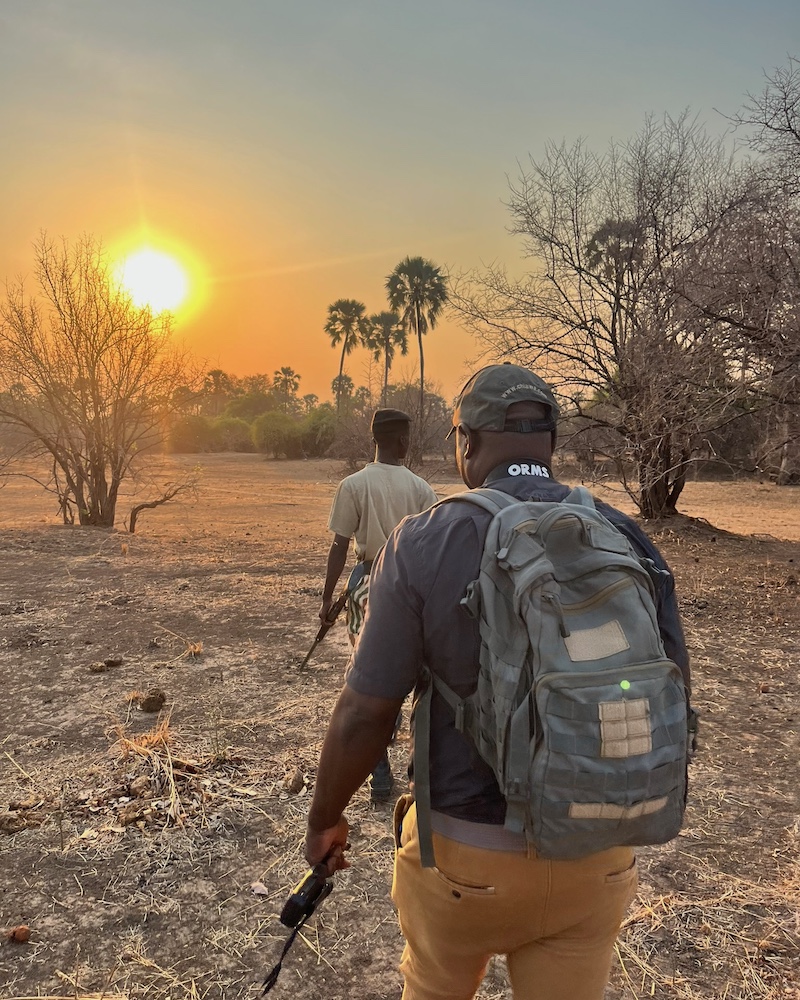
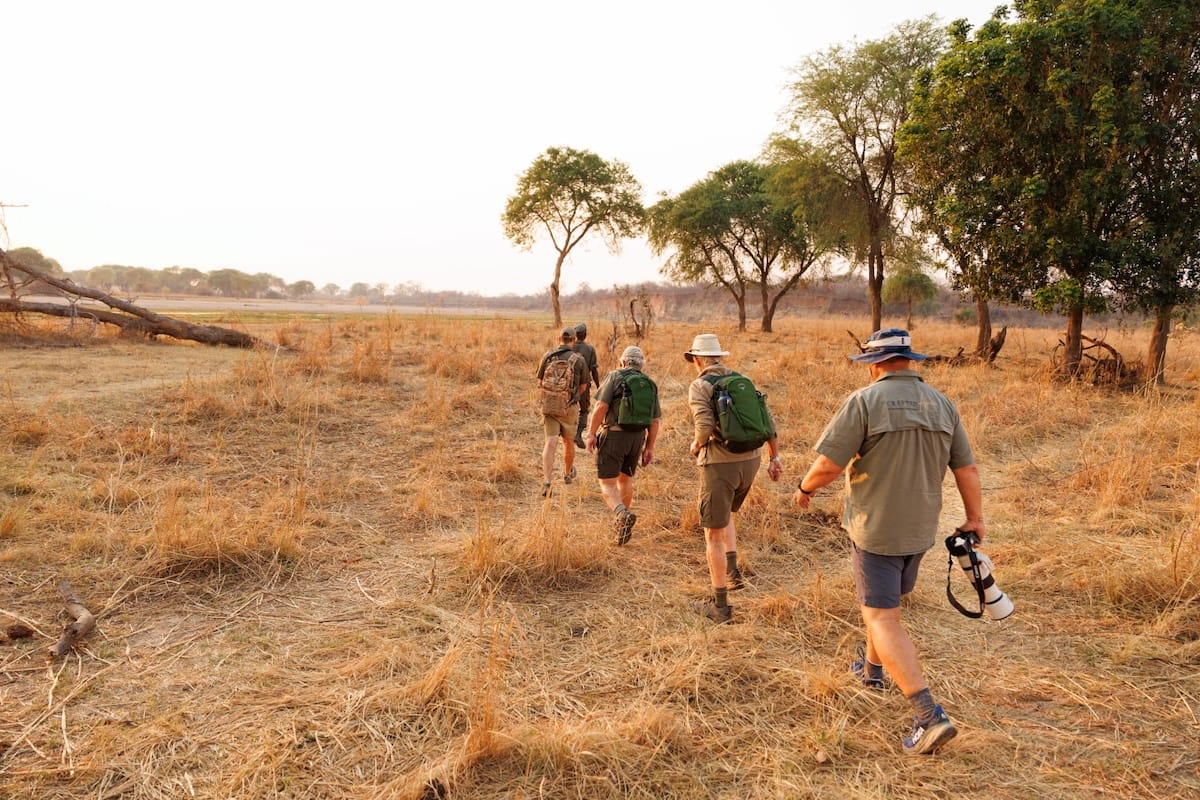
A walking safari is not a hike with animals in the background. It is a guided experience led by a professional walking guide, typically accompanied by an armed scout whose job is to read the bush in real time and decide how close to approach, when to stop, and when to change direction.
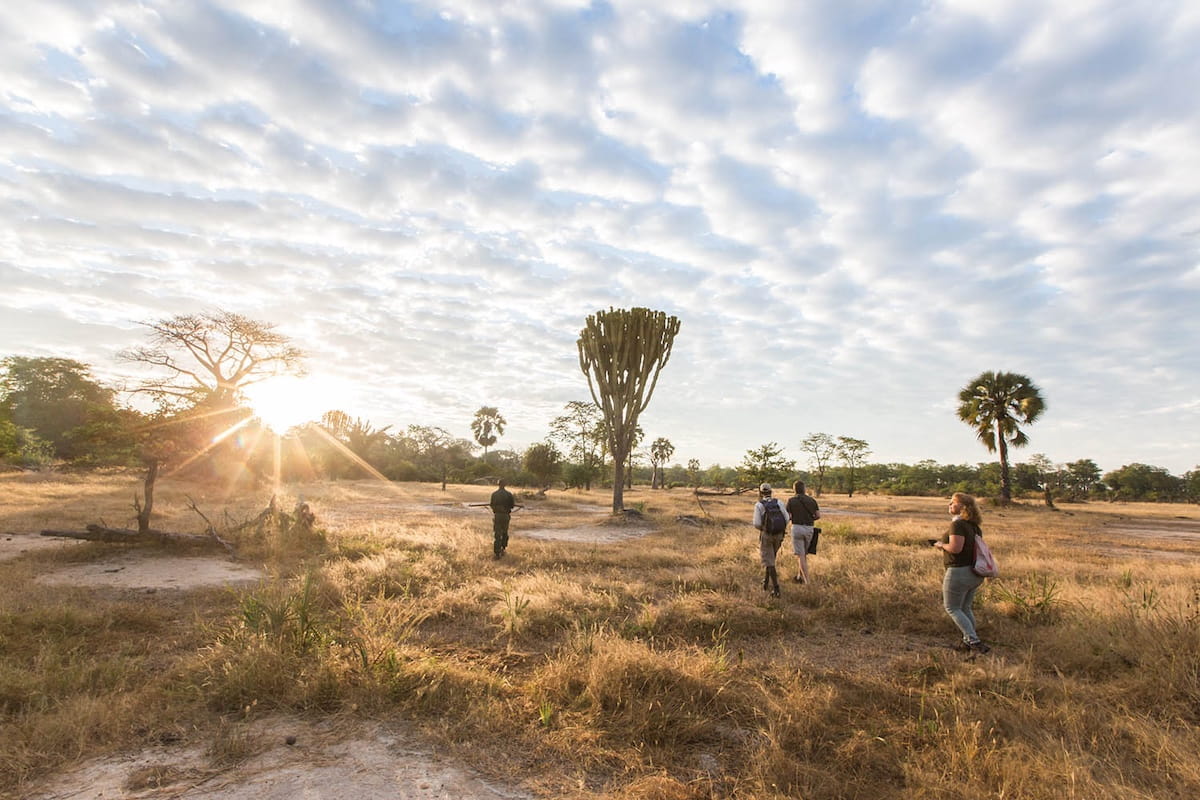
Walks begin early, before the heat builds and while the wildlife is most active. The pace is unhurried. You cover ground slowly and deliberately, stopping often. Your guide will track animals by their prints, identify birds by call, explain the relationships between plant species and the animals that depend on them, and point out things invisible to an untrained eye.
Encounters on foot differ in character from those in a vehicle. There is no engine, no roof, no glass between you and the bush. When you stop twenty metres from a grazing elephant, the only thing separating you is open air and the quiet confidence of your guide. That proximity changes the experience entirely.
Walking safaris typically run for two to four hours in the morning, sometimes with a shorter afternoon walk. They suit guests of a reasonable fitness level, though they are not strenuous in the conventional sense. The pace always matches the group.
South Luangwa National Park pioneered the modern walking safari. Norman Carr led the first commercial walking safaris here in the 1950s, and the park has kept its reputation as one of Africa’s finest walking destinations ever since. The density and diversity of wildlife in the Luangwa Valley is exceptional, and the guiding standards here are among the highest anywhere.
The Bushcamp Company operates some of the finest small camps in South Luangwa, and its walking itineraries between camps offer one of the most immersive safari experiences on the continent. Guests walk between camps over several days, spending each night in a different location deep in the valley, with the full Luangwa wilderness as their route.
Each day covers roughly eight to twelve kilometres through terrain that changes as you move through the park. Your guide reads the landscape continuously: following game trails, interpreting tracks, navigating around buffalo herds or towards a pride of lions resting in the shade. Luggage transfers between camps, meals are prepared on arrival, and the camps themselves, though small and intentionally simple, run beautifully.
This is walking safari at its most complete. Days spent entirely on foot in genuine wilderness, nights in camps that see very few guests, and guiding of a quality that takes years of experience in a single landscape to develop. For guests who want to understand South Luangwa rather than simply see it, there is no better way.
The Lower Zambezi National Park offers a different walking experience: the river itself is always present, shaping the terrain and drawing wildlife to its banks. Walking here puts you in a landscape where elephants, hippos, buffalo and predators move between the river and the forest in patterns your guide has spent years learning to read.
Mana Pools National Park on the Zambezi floodplain is, for many experienced safari travellers, Africa’s finest walking destination. It is one of the few parks on the continent where guests may walk unguided, though the walking safaris led by the camps here are extraordinary in their own right. A UNESCO World Heritage Site, Mana Pools has a quality of wildness that is immediately apparent and impossible to adequately describe.
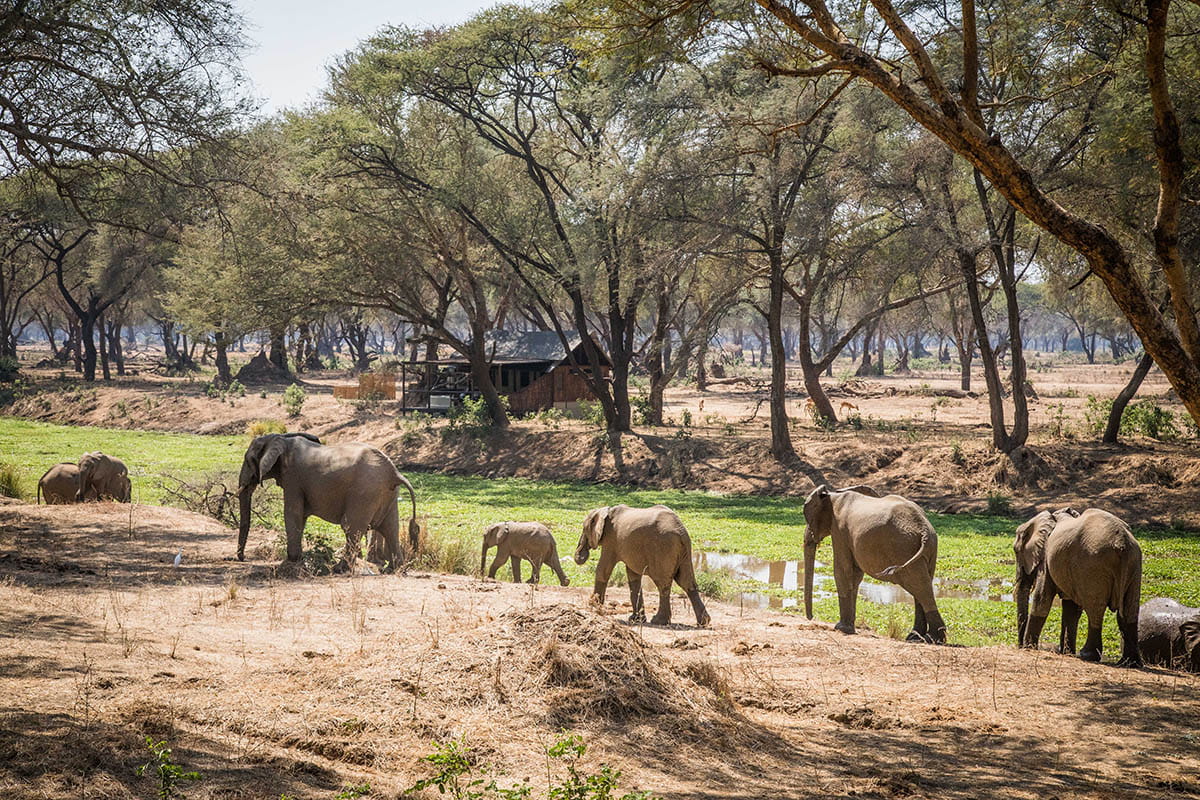
The landscape is unlike anything in Zambia or Malawi. Ancient albida trees rise from the floodplain, their canopies providing shade and food for an extraordinary concentration of wildlife. Elephants are everywhere, habituated to walking humans in a way that makes encounters on foot closer and more relaxed than almost anywhere else. Wild dogs hunt through the area seasonally. Lions, leopards, buffalo, and a remarkable diversity of birds complete a cast that makes every walk unpredictable.
Walking in Mana Pools requires genuine commitment. The park is remote, the terrain is flat but demanding in heat, and the wildlife encounters happen at genuinely close range. It is not the right destination for every guest. But for those with some safari experience who want the most immersive, unmediated encounter with African wilderness available, Mana Pools on foot is the answer.
Malawi’s walking safaris are less well known than those in Zambia or Zimbabwe, which is precisely what makes them worth considering. Liwonde National Park and Majete Wildlife Reserve have both been transformed under African Parks management, and walking in either park today puts you in a landscape where the conservation work is visible, and the wildlife encounters are genuine.
Guide quality in both parks has improved considerably in recent years. Walks here tend to be more intimate than those in the larger Zambian parks, with smaller groups and a pace that allows for real engagement with the environment. For guests new to walking safaris, Malawi is an excellent place to start.
Mount Mulanje rises from the tea estates of southern Malawi to 3,002 metres at Sapitwa Peak, the highest point in central Africa. The massif is a destination in its own right: a network of trails, mountain huts maintained by the Mountain Club of Malawi, and landscapes that shift from cedar forest to open plateau to dramatic rock faces within a single day’s walking.
The Skyline Trail is the most demanding route, taking experienced hikers to the Sapitwa summit over several days. For guests who want the mountain without the full commitment, day hikes from the lower slopes offer cedar forest, waterfalls, and views that make Mulanje exceptional without requiring technical experience or multi-day fitness.
Nyika Plateau in northern Malawi offers a completely different walking experience: vast open highland, rolling grassland, and a birdlife density that draws serious birders from across the world. The Livingstone Trail is the most ambitious route, a three-day walk from Nyika down to Livingstonia on the Lake Malawi escarpment, through landscape that changes dramatically with altitude.
Zomba Plateau, in southern Malawi, is more accessible and suits guests who want a half-day or full-day walk with exceptional views. The plateau rises steeply from the town of Zomba and offers forest trails, waterfalls and panoramic views over the southern lakeshore.
Walking safari itineraries require more careful matching than standard game drive trips. Guide quality is everything, and the best guides in these parks are in high demand. Camp-to-camp itineraries need to be booked well in advance. Your fitness level and previous safari experience shape which destinations and operators we recommend.
We handle all logistics: flights, transfers, camp bookings, park fees and equipment guidance. For multi-day walking itineraries such as the Bushcamp Company routes in South Luangwa or a Mulanje summit attempt, we provide detailed preparation notes so guests arrive ready for what they have signed up for.

At Crafted Africa, we are passionate about what we offer our clients: