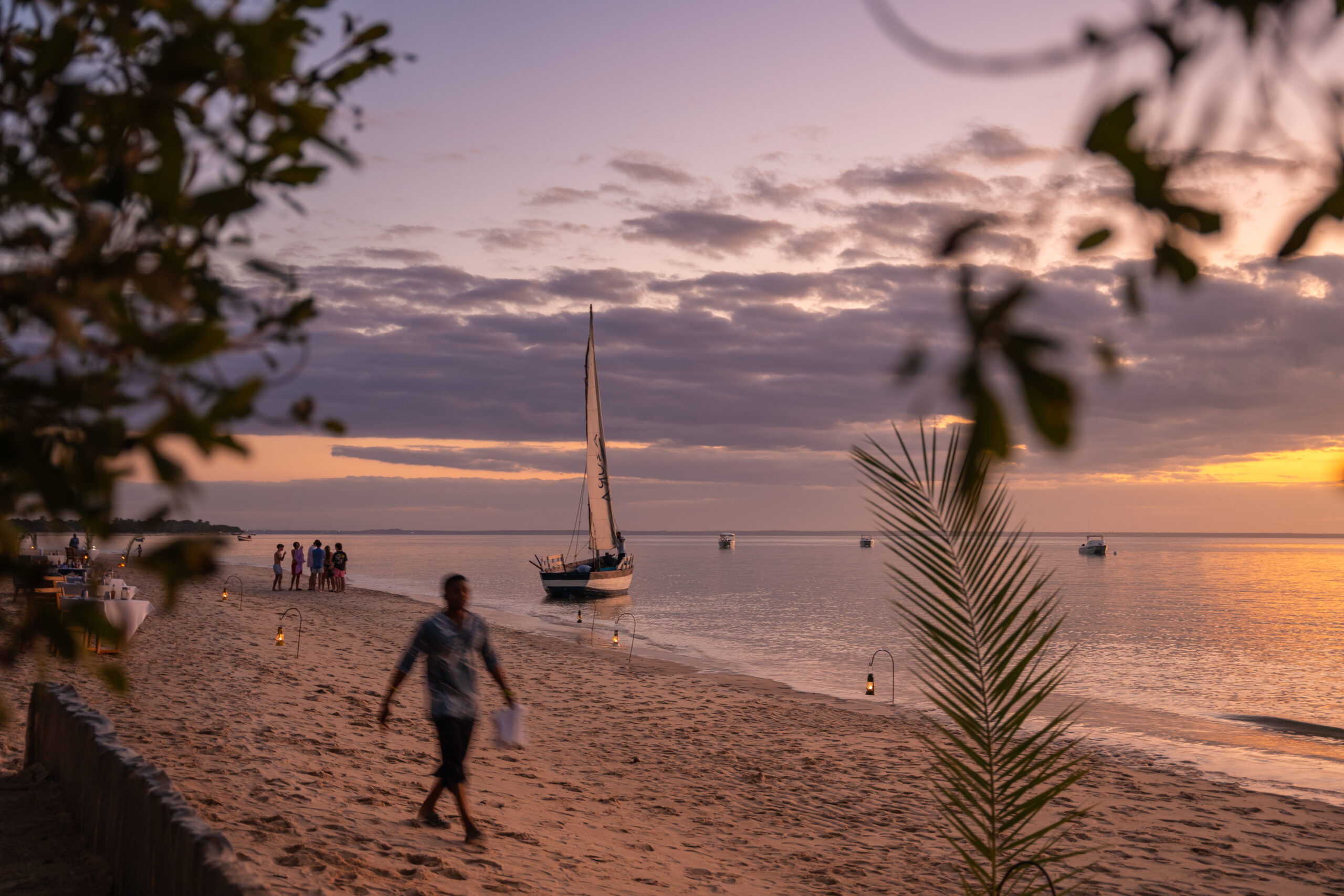
Africa’s water is not one thing. It is a freshwater lake so vast it was once mistaken for an inland sea. It is the deserted islands of the Bazaruto Archipelago, ringed by warm Indian Ocean water and coral reefs. It is the ancient stone streets of Ilha de Mozambique, where Portuguese traders once anchored.
What these places share is the quality of stillness, and the knowledge that very few people have found them. We have been working in these waters for fifteen years, and we know them in a way that takes time to earn. Whether you are looking to extend a safari with a week on Lake Malawi, to base yourself on a private island in Mozambique, or to find a beach that has no footprints on it, we can place you exactly where you need to be.
Mike Varndell and the wider Crafted Africa team have been working in these waters for fifteen years, and we know them in a way that takes time to earn. Mike was last in Mozambique, exploring the Bazaruto Archipelago in May 2026. That firsthand knowledge shapes every retreat we build.

Lake Malawi is one of Africa’s great surprises. The ninth-largest lake in the world, it stretches nearly 600 kilometres from north to south, with water so clear you can see the bottom at depth. Along its shores and on its islands, a handful of intimate lodges offer something genuinely rare: complete seclusion, warm water, and the kind of unhurried days that are increasingly hard to find anywhere.
Likoma Island sits in the middle of the lake, closer to the Mozambican shore than the Malawian one, and feels entirely removed from the outside world. The island has its own extraordinary character: a vast Anglican cathedral built by missionaries in the late nineteenth century rises improbably from the lakeshore, and the fishing villages that surround it have changed little in generations.
On the water, snorkelling among Likoma’s rocky outcrops puts you in the middle of the lake’s famous cichlid population, more than 700 species endemic to Malawi and found nowhere else in the world. Kayaking along the island’s shoreline, sunset cruises on the lake, and stand-up paddleboarding are all available from the lodges here. For guests who want to explore beyond the water, walks to the cathedral and through the surrounding villages offer a genuine sense of island life.
Mumbo Island is smaller still: uninhabited, off-grid, and one of our most consistent recommendations for guests who want total disconnection. The camp here takes very few guests at a time, and the pace of days on Mumbo is shaped entirely by the water and the light.
Snorkelling directly off the island is exceptional, with visibility that rewards slow movement over the rocks. Kayaking around the island’s perimeter at dawn is one of the quieter pleasures available anywhere in Malawi. No roads, no other lodges, and no scheduled activities beyond what the lake itself offers. For guests who find that sufficient, it is close to perfect.
Cape Maclear on the southern lake offers a livelier alternative to the island camps, with a fishing village atmosphere and easy access to some of the best snorkelling on the lake. Glass-bottom boat trips over the offshore reefs, kayaking between the small islands of the Nankumba Peninsula, and sunset dhow sailing are all available here. For families or guests who want a beach base with more to do, Cape Maclear is the natural choice on Lake Malawi.

Mozambique’s coastline runs for nearly 2,500 kilometres, but the places we work with occupy a tiny fraction of it, chosen because they are genuinely exceptional rather than simply available.
The Bazaruto Archipelago is a national marine park, and the protection shows. Coral reefs in remarkable condition, dugongs still present in the channels, and water that earns every photograph taken of it. The lodges here take very few guests, and the sense of privacy is absolute.
Diving and snorkelling in the archipelago puts you alongside manta rays, turtles, and an exceptional diversity of reef fish. Dhow sailing between the islands is one of the most beautiful ways to spend an afternoon in Mozambique, and at low tide the sandbanks that emerge between the islands create a landscape that is almost without parallel. Fishing, horse riding on the beach, and sea kayaking through the island channels are all available, as are helicopter flights over the archipelago for guests who want to see its scale from the air.
Tofo, on the southern coast, draws guests who want to combine beach time with world-class diving. Whale sharks and manta rays are reliably encountered here between November and March, and the reef diving is among the best on the Mozambique coast. Snorkelling is accessible directly from the beach, and the local dive operators run well-organised excursions for all experience levels. For guests who prefer the surface, most lodges offer kayaking along the coastline and stand-up paddleboarding.
Vilanculos serves as the mainland gateway to the Bazaruto Archipelago and has its own relaxed, genuinely Mozambican character. Dhow trips into the archipelago leave from here, and the town’s unhurried pace suits guests who want something less resort-like than the island lodges. Fishing charters operate from the bay, and the reefs accessible by boat from Vilanculos are far less visited than those in the heart of the archipelago.
Ilha de Mozambique is in a category of its own: a UNESCO World Heritage Site where four centuries of Swahili, Portuguese and Indian Ocean trading history are written into the stone buildings and narrow streets. It is not a conventional beach destination, but for guests interested in history and culture, it adds a dimension to a Mozambique trip that nothing else can.
Walking the island’s streets is the primary activity here, and it rewards unhurried exploration: the fort of São Sebastião, the palace of São Paulo, the chapels and mosques that reflect centuries of layered occupation. Boat trips to the nearby reefs and sandbanks offer a counterpoint to the historical walking, and the seafood in the island’s handful of restaurants is exceptional.

A beach stay in this part of the world is most rewarding when it is paired with context: an understanding of where you are, what surrounds you, and what to do beyond simply lying on the sand. That is where fifteen years of on-the-ground experience makes a genuine difference.
We handle everything: flights, transfers, lodges, activities and all the details in between. Whether you are combining a beach stay with a safari, or looking for a dedicated coastal trip, we design it around you rather than around a fixed itinerary.

At Crafted Africa, we are passionate about what we offer our clients: