The experiences on this page are not for everyone. They ask you to move through Africa differently: by air, by water, and on foot, in places where the wildlife is wild, and the distances are real. For guests who want that, Malawi, Mozambique, Zambia and Zimbabwe repay the effort many times over.
We have been planning journeys through these landscapes for fifteen years. Mike Varndell and the Crafted Africa team spend time in the field every year, so our recommendations come from first-hand experience rather than secondhand reports.

Some landscapes only make sense from above. We work with trusted operators in Malawi, Mozambique, Zambia, and Zimbabwe on flights that show you a place’s scale in a way the ground can’t.
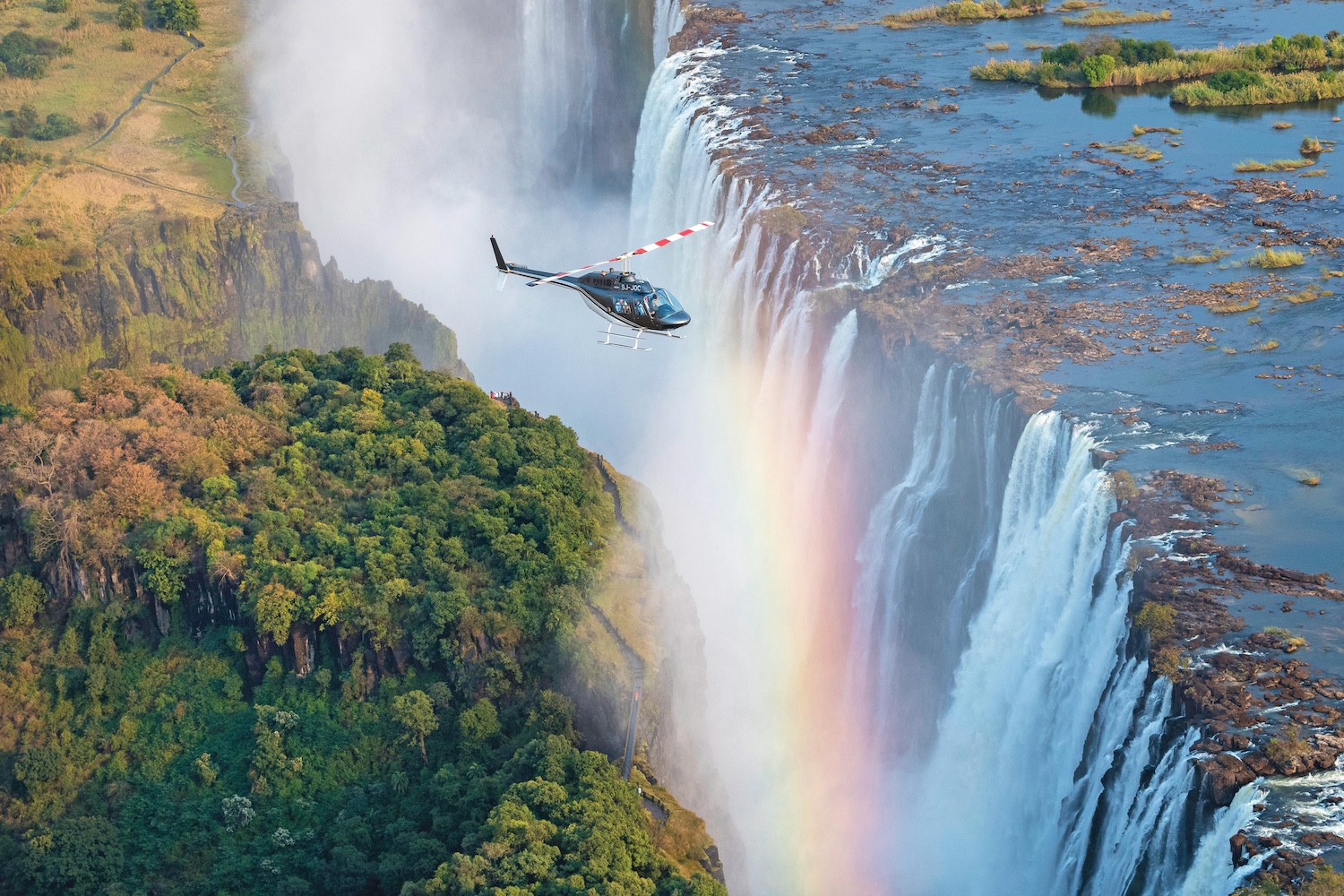
At peak flow, more than 500 million litres of water a minute pour over the edge into the Zambezi gorge, and you can see the spray from up to 50 kilometres away. From the ground, you see the falls section by section. A helicopter flight shows you all of it: the full width of the curtain, the depth of the gorge, the zigzag of gorges the river has cut downstream and, when the sun is right, the rainbows that form in the spray.
Microlight flights leave from the Zambian side and fly lower and slower, over the falls and the islands of the upper Zambezi. It is a more open, quieter way to see the river. You can combine both with ground activities on the same day.
Liwonde shows what good conservation management can do. Since African Parks took over the park in 2015, elephant numbers have recovered, cheetah and lion have been reintroduced, and the Shire River corridor is thriving again.
A helicopter flight follows the Shire River floodplain, where elephant, hippo and buffalo move between Borassus palms and open water, and fish eagles hunt along the banks. From above, you see how the river holds the whole park together, something you only partly grasp from a vehicle.
The Bazaruto Archipelago is a national marine park made up of five islands off Mozambique’s coast. From the air, you see how it fits together: turquoise shallows dropping into deep blue channels, sand islands edged by reef, and dhows moving between them as they have for centuries. Arriving by helicopter means you land already knowing the shape of the place you are about to explore.

Mozambique’s Indian Ocean coastline offers a wide range of water activities, whether you stay on the surface or go underwater.
Mozambique’s reefs hold healthy coral, manta rays, turtles and large numbers of reef fish. The coast is also one of the few places in the world where you have a realistic chance of swimming with whale sharks. Tofo Beach, on the southern coast, is best known for whale sharks and mantas, and your best chances of seeing whale sharks are between October and March.
If you would rather stay on the surface, sea kayaking through the channels of the Bazaruto Archipelago is a quieter way to move between the islands. At low tide, sandbanks rise between them, and you can pull the kayak up and walk across them.
For more on diving and snorkelling in Mozambique, including seasons and sites, see our Indian Ocean Diving page.

On the Zambian side, a natural rock pool sits right at the lip of Victoria Falls. When the river drops low enough, usually from around mid-August to mid-January, you can swim in Devil’s Pool with only a rock ledge between you and a drop of more than 100 metres. You can get there by guided boat trip to Livingstone Island.
Below the falls, the Zambezi runs through the Batoka Gorge. White-water rafting here is rated Class V, among the world’s most demanding commercially run rivers. Above the gorge, the gorge swing offers a thrilling ride.
Further downstream, below Lake Kariba, a canoe safari through Lower Zambezi National Park is a completely different way to meet the river: slow, quiet and set by whatever the elephants and hippos on the banks decide to do.
Mount Mulanje rises sharply out of the tea estates of southern Malawi to 3,002 metres at Sapitwa Peak, the highest point in Malawi. The massif has a network of trails and mountain huts, and in a single day’s walk you can move from Mulanje cedar forest to open plateau to bare rock faces.
Reaching the summit of Sapitwa takes fit, experienced walkers a multi-day hike. If you want the mountain without the full climb, shorter day hikes from Likhubula take you into the cedar forest and waterfalls, with no technical experience needed.

Active experiences in remote places need more careful planning than a standard safari. Seasons determine what is possible and when, and safety standards vary widely between operators. We have done the work of finding guides and operators we trust, and we only recommend experiences our team has assessed directly.
We build every itinerary around your interests, fitness, and travel dates. We handle the logistics: flights, transfers, permits, equipment and accommodation. You get on with the experience.

At Crafted Africa, we are passionate about what we offer our clients: